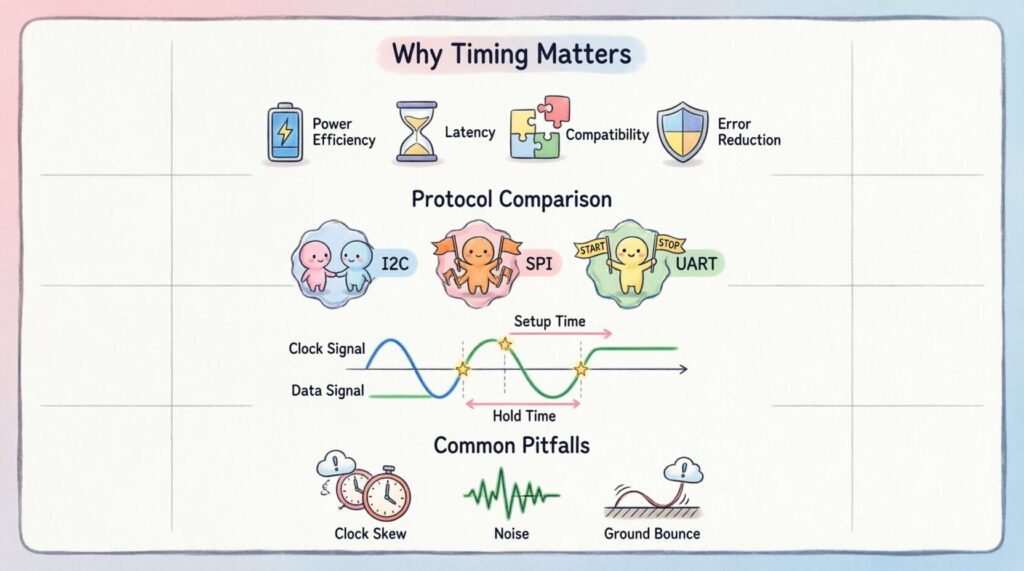
timing diagram

Timing Diagrams for IoT: Ensuring Reliable Communication Between Components

Timing Diagrams for IoT: Ensuring Reliable Communication Between Components

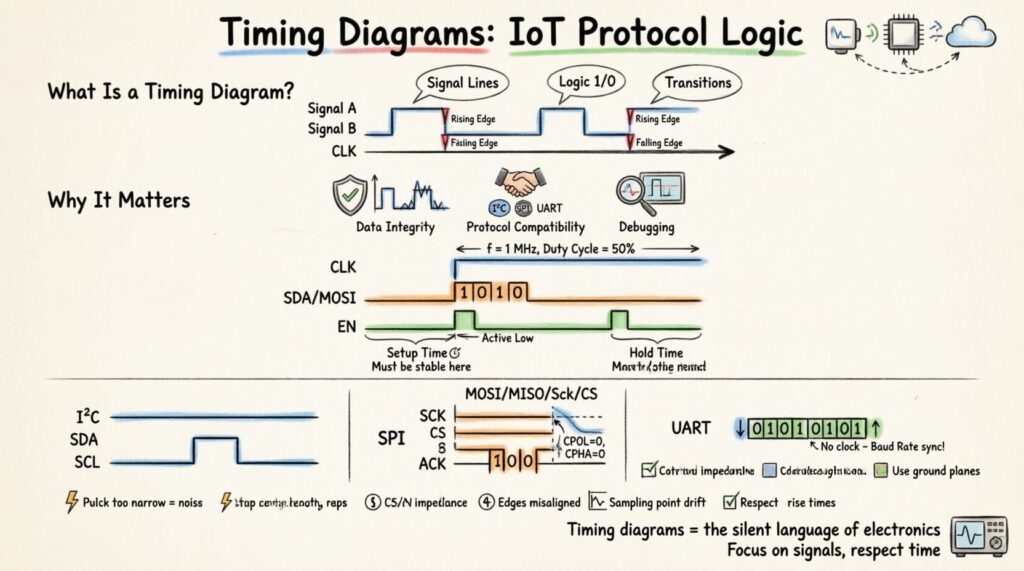
In the complex ecosystem of Internet of Things (IoT) systems, data does not simply flow; it travels along specific pathways with strict temporal constraints. When microcontrollers, sensors, and cloud interfaces interact, the success of the operation depends less on the logic of the code and more on the precise timing of electrical signals. A timing […]

Timing Diagrams for IoT: Ensuring Reliable Communication Between Components Read More »
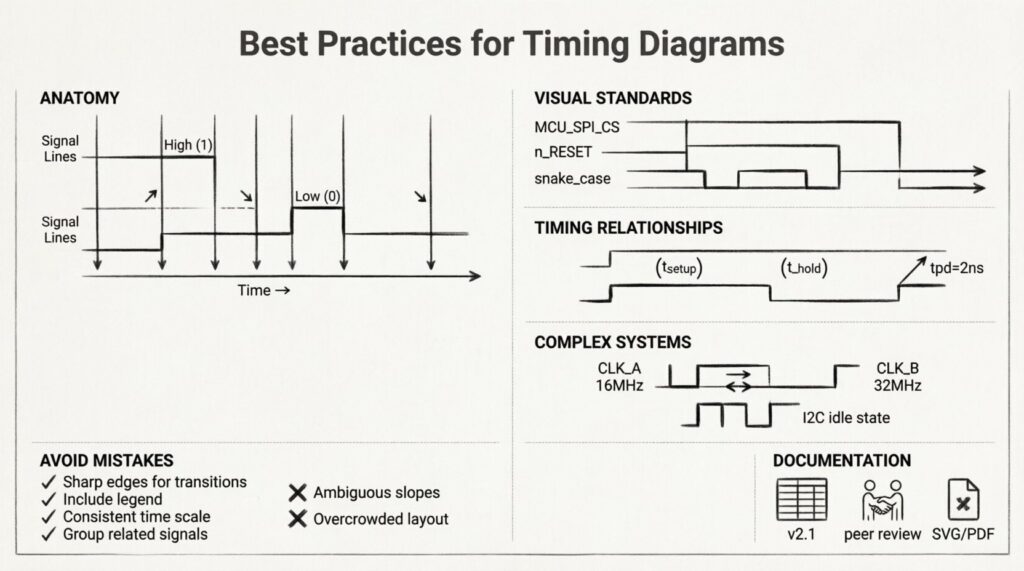
Best Practices for Timing Diagrams: Keep Your Embedded Logic Readable

Best Practices for Timing Diagrams: Keep Your Embedded Logic Readable

In the intricate world of embedded systems engineering, clarity is not merely an aesthetic choice; it is a functional necessity. Timing diagrams serve as the universal language for describing the temporal relationships between signals. Whether you are coordinating a microcontroller with a sensor or defining the handshake protocol for a high-speed interface, the precision of

Best Practices for Timing Diagrams: Keep Your Embedded Logic Readable Read More »

Timing Diagrams: A Step-by-Step Method to Map Out Your Firmware Timeline

Timing Diagrams: A Step-by-Step Method to Map Out Your Firmware Timeline

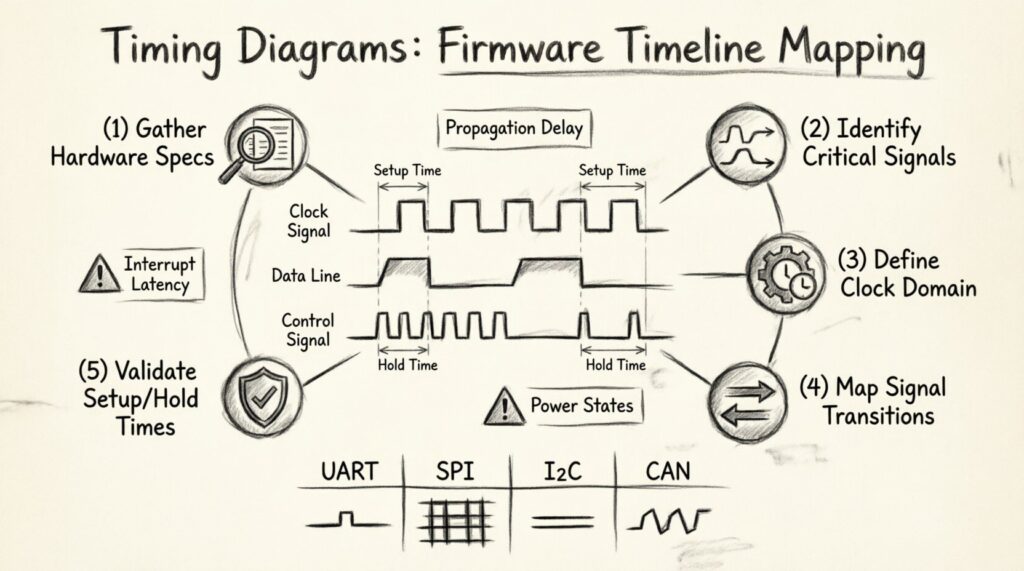
Firmware development exists at the intersection of abstract logic and physical reality. While code executes in a logical sequence, hardware responds to voltage levels, clock cycles, and propagation delays. Without a clear visual representation of these interactions, even the most robust code can fail to communicate effectively with peripherals, sensors, or external systems. This is

Timing Diagrams: A Step-by-Step Method to Map Out Your Firmware Timeline Read More »

Definitive Overview of Timing Diagrams: A Beginner’s Blueprint for Embedded Systems

Definitive Overview of Timing Diagrams: A Beginner’s Blueprint for Embedded Systems

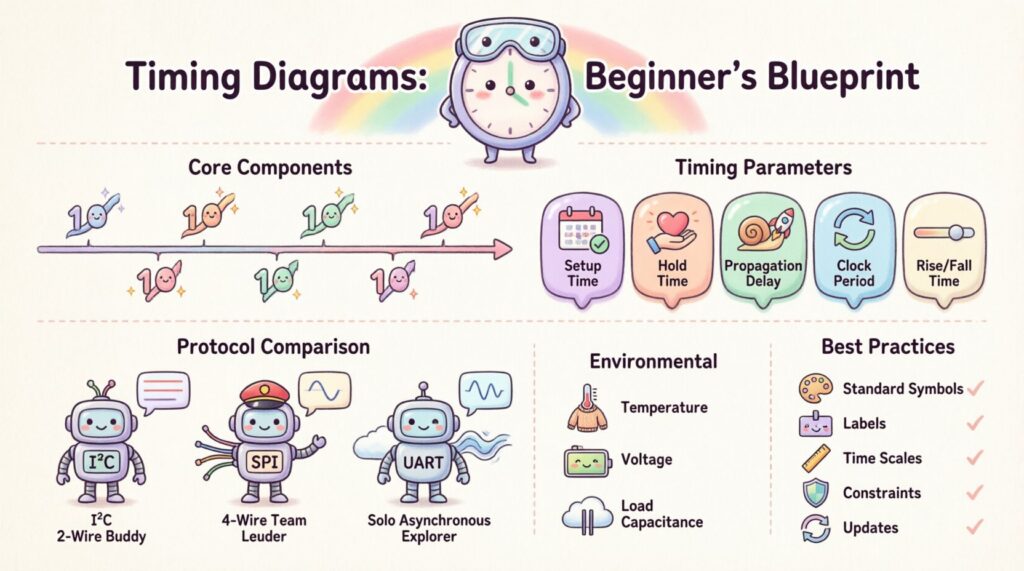
In the complex world of embedded electronics, communication is everything. Devices do not talk with words; they speak in pulses, clock cycles, and voltage states. To understand this digital conversation, engineers rely on a specific visual language known as the timing diagram. These diagrams are the blueprints of electronic behavior, mapping out exactly when signals

Definitive Overview of Timing Diagrams: A Beginner’s Blueprint for Embedded Systems Read More »

Quick Start Guide: Drawing Your First Timing Diagram for Firmware Projects

Quick Start Guide: Drawing Your First Timing Diagram for Firmware Projects

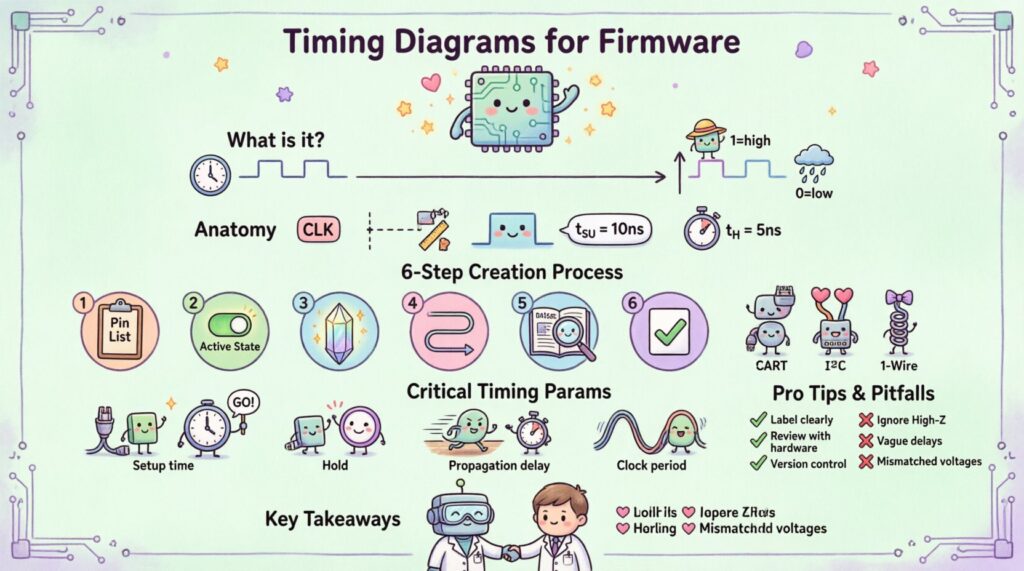
Embedded development relies heavily on the synchronization between software instructions and physical hardware signals. When firmware interacts with sensors, displays, or communication buses, precision is non-negotiable. A timing diagram serves as the blueprint for this interaction, visually mapping out how signals behave over time. This guide provides a structured approach to creating these diagrams without

Quick Start Guide: Drawing Your First Timing Diagram for Firmware Projects Read More »

Understanding Timing Diagrams: The Hidden Logic Behind IoT Protocols

Understanding Timing Diagrams: The Hidden Logic Behind IoT Protocols

Embedded systems and Internet of Things (IoT) devices rely heavily on precise communication. Without a shared understanding of when data arrives and when signals change state, devices cannot talk to one another effectively. This is where timing diagrams become essential. They serve as the blueprint for digital communication, illustrating the relationship between signals over time.

Understanding Timing Diagrams: The Hidden Logic Behind IoT Protocols Read More »

Tutorial: Visualizing State Transitions with Timing Diagrams for Beginners

Tutorial: Visualizing State Transitions with Timing Diagrams for Beginners

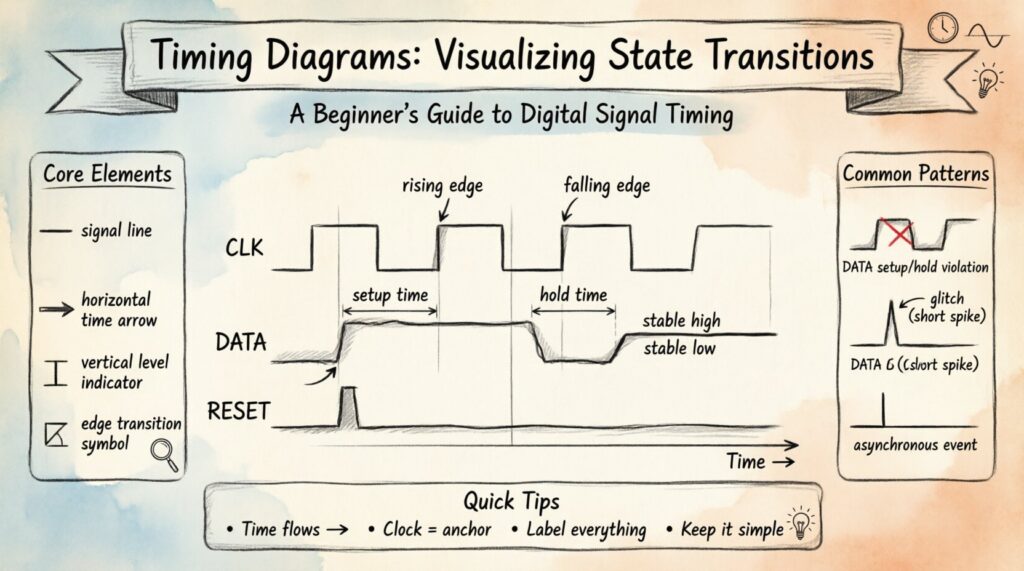
In digital systems and logic design, understanding how a system changes behavior over time is crucial. This is where timing diagrams become essential. They provide a visual representation of signals and their state transitions. For beginners, learning to read and create these diagrams is a foundational skill. This guide will walk you through the process

Tutorial: Visualizing State Transitions with Timing Diagrams for Beginners Read More »

Case Study: Diagnosing a Race Condition Using a Timing Diagram in IoT

Case Study: Diagnosing a Race Condition Using a Timing Diagram in IoT

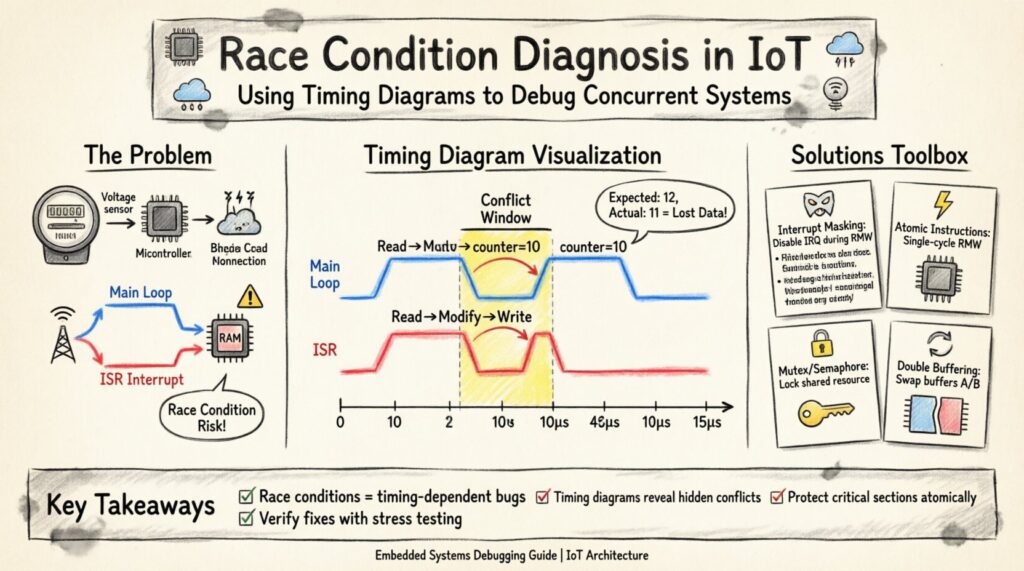
In the intricate world of embedded systems and Internet of Things (IoT) architecture, timing is not merely a metric; it is a fundamental constraint that dictates system stability. When multiple threads or interrupts attempt to access shared resources simultaneously, the potential for a race condition emerges. This guide provides a technical examination of how to

Case Study: Diagnosing a Race Condition Using a Timing Diagram in IoT Read More »

Comparison Made Clear: Timing Diagrams vs. Sequence Diagrams for IoT Developers

Comparison Made Clear: Timing Diagrams vs. Sequence Diagrams for IoT Developers

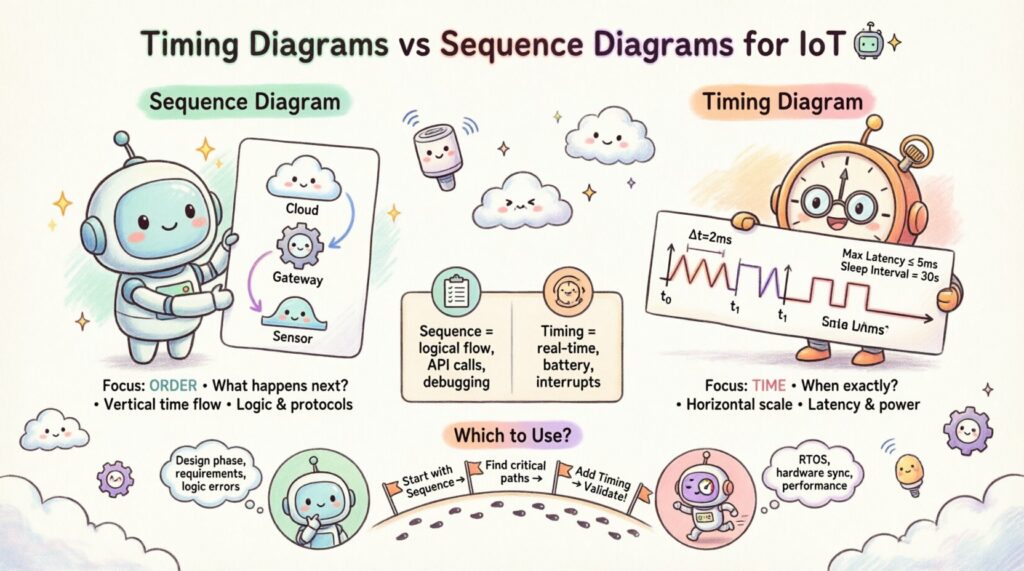
The Internet of Things (IoT) ecosystem is defined by complexity. It is not merely about connecting devices; it is about orchestrating interactions across heterogeneous networks, constrained hardware, and strict temporal requirements. For developers architecting embedded systems, choosing the right visualization tool is critical. Two of the most prevalent modeling techniques in the Unified Modeling Language

Comparison Made Clear: Timing Diagrams vs. Sequence Diagrams for IoT Developers Read More »

Comprehensive Walkthrough: How to Model Time-Triggered Behavior Step-by-Step

Comprehensive Walkthrough: How to Model Time-Triggered Behavior Step-by-Step

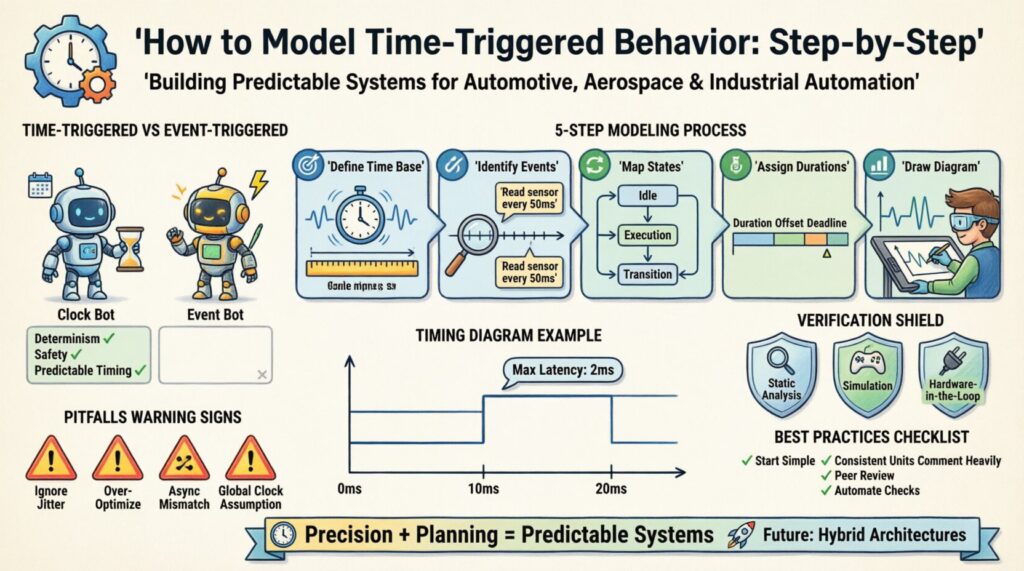
Designing systems where timing is paramount requires a disciplined approach. Whether developing safety-critical automotive control units, aerospace avionics, or industrial automation controllers, the predictability of execution is non-negotiable. Time-triggered behavior is a fundamental architectural pattern used to ensure that system actions occur at precise intervals, regardless of external interruptions. This guide provides a deep dive

Comprehensive Walkthrough: How to Model Time-Triggered Behavior Step-by-Step Read More »